
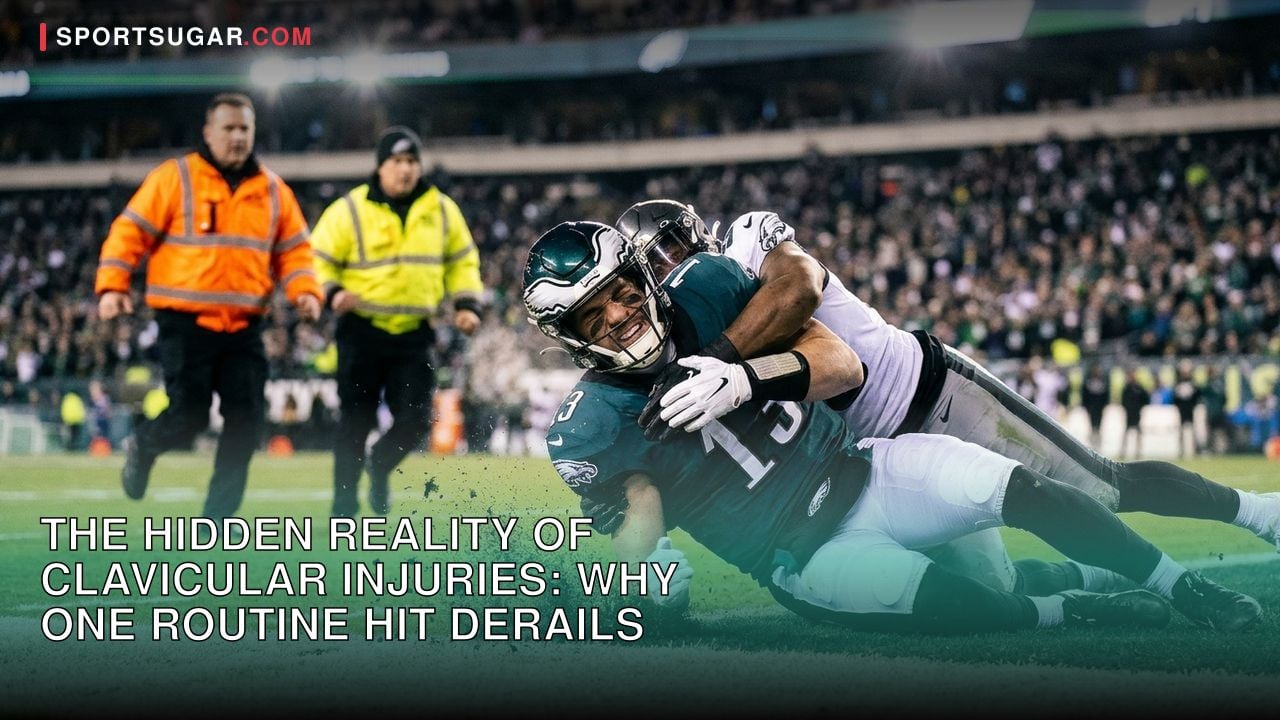
It always happens on a play that looks almost completely harmless. A quarterback rolls out, takes a routine hit to the turf, and instead of hopping back up to slap hands with his linemen, he stays down clutching his chest.
That sickening pause on the sideline tells you everything before the medical cart even starts moving. Within minutes, the training staff confirms the diagnosis everyone dreaded: a significant clavicular injury that immediately slams the championship window shut.
“When that collarbone gives out, your season completely changes in the span of a single heartbeat.”
So why is the clavicle—essentially a slender S-shaped bone guarding the chest and shoulder girdle—such a catastrophic weak point for elite contact athletes? And more importantly, what does the road back actually look like when the hardware gets screwed into bone?
The Breakdown: Anatomy of a Season-Ender
Your clavicle acts as a literal shock absorber between the sternum and the shoulder blade. When an athlete gets driven hard into the turf shoulder-first, the entire force of impact channels right through that delicate bone.
Here is what makes clavicular trauma uniquely devastating in modern sports:
- Direct Force Funneling: When a 250-pound linebacker lands dead-weight on a shoulder, the clavicle usually bears the brunt of the load.
- High Risk of Re-Fracture: Rushing back too fast before the bone fully ossifies turns a standard six-week hiatus into a recurring nightmare.
- Throwing Mechanics Disruption: For quarterbacks and pitchers, even a microscopic change in collarbone alignment can completely throw off their release point and velocity.
By The Numbers
History shows that dealing with a fractured clavicle isn’t just about pain tolerance—it is a brutal waiting game dictated by surgical plates and healing bone density.
| Athlete | Injury Type | Missed Time | Post-Return Record |
|---|---|---|---|
| Aaron Rodgers (2013) | Left Clavicle Fracture | 7 Games | Won Division Week 17 |
| Tony Romo (2015) | Left Clavicle (Twice) | 11 Games Total | Season Derailment |
| Anthony Richardson (2023) | AC/Clavicular Joint Grade 3 | 12 Games (IR) | Season-Ending Surgery |
| Nick Foles (2019) | Left Clavicle Fracture | 8 Games | Lost Starting Spot |
The Vibe: Panic in the Fanbase
The moment “clavicular” trends on social media, the timeline immediately fractures into panic. Fantasy football managers scramble to blow their entire waiver budgets on backup playmakers within seconds.
Meanwhile, team fanbases oscillate between despair and denial, praying for a “clean hairline break” rather than a displaced fracture requiring surgical screws and an eight-week shutdown. The vibe is tense, emotional, and filled with armchair orthopedic surgeons analyzing slow-motion replay clips frame by frame.
The Takeaway: Can You Rush Modern Bone Healing?
Medical tech has come light years with titanium compression plates, but bone remodeling still operates on mother nature’s clock. Trying to rush an athlete back under center before the eight-week mark often leads straight to disaster.
When a franchise star suffers a serious clavicular blow, coaches have to stop looking at next week’s schedule and start planning for survival football. Without a stout backup plan, that single broken bone will break your entire season.
Do you think teams should sit star players longer after collarbone injuries, or is it worth the gamble to bring them back for a playoff push? Drop your take in the comments.
🔥 Trending Now


AI Editor’s Take: “High-stakes injury drama triggers massive fan anxiety, fantasy football chaos, and fierce debate over player protection.”
* This content was created with the support of AI.


