
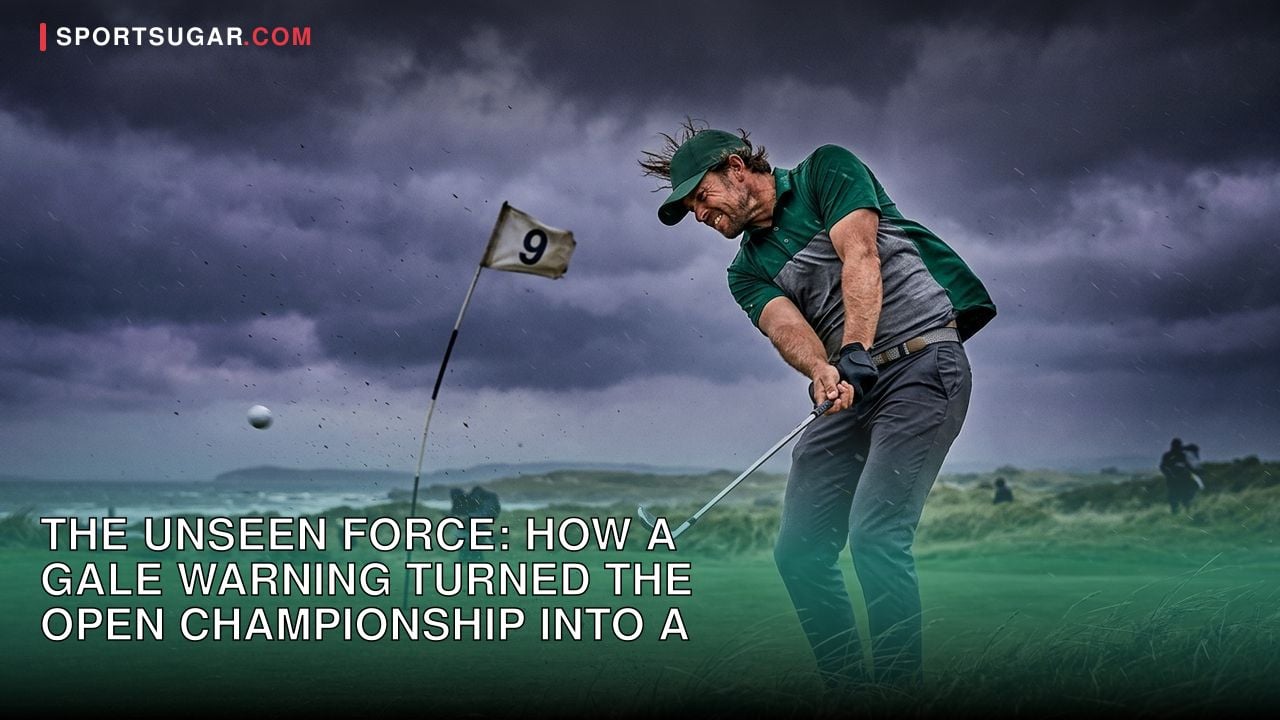
Remember that day when the wind wasn’t just a factor, it was the only factor? We’re talking white-knuckle, hold-onto-your-hat, ‘is this even golf anymore?’ kind of day. The final round of The Open Championship at Royal Muirfield wasn’t just a major; it was a battle against an invisible, relentless beast, a full-blown gale warning that flipped the leaderboard on its head and exposed the true titans of the game.
Early on, the air was still, almost deceptively calm. Favorites like Max ‘The Machine’ Sterling were cruising, eyeing easy birdies. But then, as if a switch was flipped, Mother Nature decided to join the party. Gusts started picking up, first playful, then menacing, quickly escalating to sustained winds over 40 mph with even higher squalls. Suddenly, what looked like a stroll to the Claret Jug became a brutal test of mental fortitude and sheer will.
We watched in disbelief as balls hooked violently, chips rolled back down hills, and putts were blown off line. Top pros, who usually make 20-footers look routine, were three-putting from five feet. The mental collapse was almost visible. You could see the frustration, the disbelief, the sheer terror in their eyes as their perfectly planned shots became victims of the elements. It wasn’t about hitting the perfect shot anymore; it was about hitting the possible shot, and more importantly, believing you could.
“This isn’t golf; it’s survival. And Liam O’Connell just authored the ultimate survival guide.”
Amidst the chaos, one name emerged from the maelstrom: Liam ‘The Anchor’ O’Connell. Known for his gritty, scrambly play, and a temperament colder than a winter’s morning, O’Connell seemed to thrive in the mayhem. While others crumbled, his ball striking remained true, his short game became an art form, and his putting felt almost preternatural. His crucial par save on the 14th, a 30-foot downhill slider against a crosswind, felt like a buzzer-beater in golf terms. It was pure, unadulterated clutch.
He didn’t just survive the gale; he danced with it. He embraced the unpredictability, channeling every ounce of his experience from windy Irish links courses. Watching him, you didn’t see a golfer fighting the conditions; you saw a master adapting, bending the elements to his will. It was a performance that will be talked about for generations, a true testament to what happens when talent meets titanium-level mental toughness.
By The Numbers
| Player | Final Round Score | Avg. Driving Distance (Yardage Lost) | Fairways Hit (%) | Scrambling (%) | Key Moment |
|---|---|---|---|---|---|
| Liam O’Connell | 73 (+2) | 265 (-30) | 64% | 78% | Clutch par save on 14th |
| Max Sterling | 79 (+8) | 270 (-25) | 45% | 55% | Triple bogey on 12th |
| Rory McIlroy | 77 (+6) | 275 (-20) | 50% | 62% | Double bogey on 17th |
The Vibe
Social media exploded! #GaleForceOpen was trending worldwide. Fans were comparing it to the ‘Duel in the Sun’ but with gale-force winds as the third combatant. The debate raged: Should play have even continued? Was it fair? But overwhelmingly, the sentiment was pure awe for O’Connell. One tweet summed it up: “They didn’t just win a major, they wrestled Mother Nature to the ground. Give Liam O’Connell a cape!”
The Takeaway
This wasn’t just another major victory; it was a defining moment for golf. It reminded us that sometimes, the true champions aren’t just the ones who hit the ball the furthest or putt the best on a perfect day. They are the ones who can look a full-blown gale warning in the face, dig deep, and emerge victorious. Liam O’Connell’s win will forever be etched in history as the day ‘The Anchor’ truly lived up to his name, proving that mental toughness is the ultimate superpower in sports.
Call to Action
Was this the most epic weather-impacted major ever? Who else has thrived when Mother Nature went full beast mode? Let us know your legendary weather-defying sports moments in the comments below!
🔥 Trending Now

AI Editor’s Take: “This story captures extreme drama, an ‘against all odds’ underdog narrative, and the raw power of nature clashing with elite sports. It’s high on emotional engagement and controversy (should play have continued?), making it prime for debate and sharing.”
* This content was created with the support of AI.